Abortion pills found more dangerous than surgical procedures

Chemical abortions using the drug RU-486 are more dangerous to mothers than surgical abortions, an Australian study has found.

Researchers who examined almost 7,000 cases found that 3.3% of the women who used the “abortion pill” for first-trimester abortions had complications sufficient to put them in hospital emergency rooms. The comparable figure for surgical abortions was 2.2%. The differences were even more pronounced among women whose post-abortion complications required a hospital stay.

The study shows that the use of RU-486 involves significant medical risks. It also serves as a reminder that surgical abortion is not a risk-free procedure for a pregnant woman. The figures from the Australian study, applied to US abortion statistics, would indicate that more than 25,000 women appear in emergency rooms each year as a result of “safe, clean, legal” abortions.

(CatholicCulture.org)

Attack on Egyptian churches leaves 12 dead, hundreds injured

Giza, Egypt, May 10, 2011(CNA).- Members of the Salafist Jihadi Islamist movement attacked three Coptic churches in the Egyptian city of Giza on May 7, killing a dozen people and injuring more than 200.

“We have no law or security – we are in a jungle,” said Giza’s Coptic Orthodox Bishop Anba Theodosius. “We are in a state of chaos. One rumor burns the whole area. Every day we have a catastrophe.”

But the Copts “will never leave our country,” the bishop added according to the Assyrian International News Agency,

The attack began on the evening of May 7 when a mob of 3,000 Muslims, thought to be followers of the hardline Salafist school of Islam, converged on St. Mina’s Church. Leaders of the mob accused members of the Coptic clergy of kidnapping a Christian woman who had married a Muslim man.

Their kidnapping story sounded like a familiar pretext, a variation on a story used to stir up tensions and justify violence against Middle Eastern Christians in the past. None of the parishioners had ever heard of the woman being “tortured” inside of their church.

When the mob said they wanted to “search” the church, the Christians refused. Afraid of what would happen next, they made emergency calls trying to get police protection. One priest said that six police officers showed up, but left the church as rioters and snipers began shooting parishioners.

When the army arrived, nearly five hours later, they made an attempt to seal off the neighborhood. But they did not stop rioters from attacking St. Mina’s Church, hurling Molotov cocktails at Coptic homes, and proceeding to two other churches in the area.

“The army was not able to control the situation,” Deacon Youssel Edward stated. “The mob was chanting ‘Islamic, Islamic.’”

According to local reports, the 3,000-strong crowd of Salafists prevented firefighters from reaching the nearby Church of St. Mary and St. Abanoub as they attacked it and shot parishioners. A third church, St. Mary’s, had its entire first floor burned.

When the violence ended 14 hours later, 12 people were dead and 232 were reportedly wounded. Hundreds of outraged Christians and sympathetic Muslims demonstrated in Cairo’s Tahrir Square on Sunday, demanding better protection from the police and military for Coptic Christians.

Nabil Sharaf el Din, an Egyptian journalist, told a Coptic television station that the army “is either incapable, or is an accomplice to the Salafis.” He said that the Egyptian military, which took power after the Feb 11 resignation of former president Hosni Mubarak, could end up discredited if it fails to take a “stern position” with the hardline Muslim group.

Of the 3,000 people who reportedly stormed the three churches, 190 have been arrested. The military and civil courts have not reached an agreement on how to prosecute those accused of the attacks.

From Catholic News Agency

World Youth Day attracts many to Madrid

World Youth Day will take place August 16-21 in Madrid, Spain.

Pope Benedict XVI will be present for a Vigil and a Mass during the biennial event.

Figures released today show that some 340,000 youth from 170 countries have registered and are slated to attend.

The Concho Padre

Blessed John Paul II still evangelizing

Vatican Spokesman Reflects on Beatification

VATICAN CITY, MAY 8, 2011 (Zenit.org).- John Paul II’s beatification was a “powerful return” of the Polish Pontiff, who is continuing his work of evangelization from heaven, according to a Vatican spokesman.

This was the evaluation given by Jesuit Father Federico Lombardi, director of the Vatican press office, in regard to the May 1 beatification of John Paul II.

The spokesman spoke of the event — which brought 1.5 million people to Rome and was broadcast around the world — on the most recent edition of Vatican Television’s “Octava Dies.”

Father Lombardi recounted what the Pope’s longtime secretary, Cardinal Stanislaw Dziwisz, shared at the April 30 vigil: “When I saw the coffin holding his body being raised up from the open tomb,” the cardinal said, “I thought: Here he is, coming back to us!”

Father Lombardi said Cardinal Dziwisz thus “expressed the feelings that flooded the hearts of those who were present in that moment, and also of those who wanted to file once again past the remains of the new Blessed, in the center of the basilica, near Peter’s tomb, as they did in the days after his death.”

“Of course, for the believer,” the spokesman continued, “John Paul II had always been alive and present, but it cannot be denied that the days of his beatification have represented a powerful return for him among the people of God in prayer and celebration.”

Father Lombardi called them “days of grace” and spoke of the “meaning and importance of every beatification but in particular, of this one, in the life of the Catholic Church.”

The Jesuit reflected on the living legacy of John Paul II in the lives of the faithful.

“Among the innumerable people who had waited from the previous night, waiting to get into St. Peter’s Square,” he said, “there were many young families, with children born in the last decade, children who certainly didn’t know Pope John Paul II, but who are heirs of the generation of ‘his’ young people.

“John Paul II knew he had the mission of taking the Church into the third millennium, and at the end of the Great Jubilee he said to us, he said to all of God’s people: ‘Duc in altum! Put out into the deep!'”

Father Lombardi affirmed that the Church does go “into the deep sea of the third millennium but knows it can continue to count on the support of an effective intercessor who invites us not to be afraid.”

He concluded by echoing the prayer Benedict XVI addressed to his predecessor at the beatification: “Continue, we implore you, to sustain from heaven the faith of God’s people. You often blessed us. Today we pray: Holy Father, bless us!”

(From Zenit in Rome)

People trump buildings and customs

Today’s readings can be found at: http://www.usccb.org/nab/readings/050911.shtml

In our reading today, we find the Jewish authorities plotting against Stephen, because they are worried that the temple (a building) and the customs of the people and Moses would be destroyed by the teachings of Jesus which Stephen was professing openly to the people. I think that we should try to learn a lesson from this Scripture. That lesson is that the Church is not made up of simply buildings and customs. What if a tornado or hurricane destroyed our church building. Would that mean that the Church ceases to exist? Of course not! The Church is not a building, but a people. In fact, the Second Vatican Council refers to the Church as the People of God. Customs, too, cannot take precedence over the good of people. This was the beginning of the end for St. Stephen, as we shall see in tomorrow’s reading. Stephen gave his life for Christ — the first martyr — because he could not go against the Holy Spirit who was within him, telling him to speak out boldly about Jesus and his Good News. Perhaps that is why our reading for today says that he had a face like an angel!

The Concho Padre

Special event coming to Holy Angels – A DON’T MISS!

Pro-life author and speaker Abby Johnson, is coming to San Angelo. She will be giving a presentation at Holy Angels Church, at the corner of A&M Avenue and SAC Ave, next Saturday, May 14, at 1:00 p.m. The event is being sponsored by the Angelo Catholic School Foundation, Angelo Catholic School, and the Cursillo Movement. Johnson is a former director of Planned Parenthood, who has had a change of heart and is now strongly pro-life. She will recount some of her experiences when she gives her talk next Saturday.

I hope that everyone in the San Angelo area will make the time to listen to Ms. Johnson’s presentation. Let’s pack Holy Angels to standing-room only.

There is no charge for this event; however, an offering will be taken up to help defray expenses.

See you there on Saturday!

The Concho Padre

Pope sends prayers and support to tornado victims

Pope Benedict XVI was saddened to learn of the death, devastation and suffering caused by the April 25-28 tornadoes across the Southern United States and sends his prayers and support to victims and those engaged in relief and rebuilding efforts, according to a message from the Vatican.

In a May 2 communiqué to Archbishop Thomas J. Rodi of Mobile, Alabama, Cardinal Tarcisio Bertone, the Vatican Secretary of State, wrote:

“His Holiness Pope Benedict XVI was saddened to learn of the tragic consequences of the devastating tornado which struck Alabama and neighboring states, and he asks you to express his deep solidarity and pastoral concern to those affected by this natural catastrophe. He joins all of you in offering fervent prayers that Almighty God will grant eternal peace to those who have died and consolation and strength to the homeless, injured and suffering. Upon the local civil and religious leaders, and upon all engaged in the work of relief and rebuilding, he invokes the divine gifts of wisdom, strength and generous perseverance.”

The Concho Padre

Pope at Venice: bring hope to modern man


On Sunday Pope Benedict XVI celebrated Mass near Venice for a congregation of 300,000, telling them to give hope to modern man by “listening to and loving the Word of God.”

“Dear brothers and sisters! I have come among you as the Bishop of Rome and successor of Peter’s ministry to confirm fidelity to the Gospel and communion,” he told those gathered in San Giuliano Park in Mestre, an industrial town on the other side of the lagoon from the famous island city of Venice.

“As in the past, when those churches were known for apostolic zeal and pastoral dynamism, so today we need to promote and defend the truth with courage and unity of the faith. You must give an account of Christian hope for modern man, often overwhelmed by vast and disturbing issues that arise in crisis and shake the very foundations of his being and his activity.”

In a grand pastiche of the byzantine splendor of the city’s St. Mark’s basilica, the organizers of today’s Mass had erected a domed sanctuary draped with golden mosaics printed on cloth.
There, the Pope gave a commentary on today’s gospel, which recounts the disappointment of two disciples after the crucifixion of Jesus. They shared their gloom while walking towards the town of Emmaus near Jerusalem.

Pope Benedict connected these disciples’ feelings to present attitudes.

“The disciples of today are moving away from the Jerusalem of the Crucified Jesus and the Risen Lord, no longer believing in the power and the living presence of the Lord,” he explained. The problems of evil, pain and suffering, of injustice and oppression, lead today’s Christians to similarly say, “we were hoping that the Lord deliver us from evil, pain, suffering, fear, injustice.”

The Pope suggested that the solution to such despair was the same today as it was for the two disciples on the road to Emmaus – listening to Jesus and receiving him “in the breaking of bread.”

First, he said, it is necessary to be “listening to and loving the Word of God, reading it in light of the Paschal Mystery, for it warms our hearts and enlightens our mind, and helps us to interpret the events of life and give them meaning.

“Then, you must sit at the table with the Lord, to become his guests, so that his humble presence in the Sacrament of his Body and his Blood we restore our eyes of faith, to look at everything and everyone through the eyes of God, in light of his love.”

The Pope concluded by calling upon the Catholics of the region to uphold the Christian values of their forebears and to set “new missionary objectives” for themselves including building “bridges of dialogue between peoples and nations.”

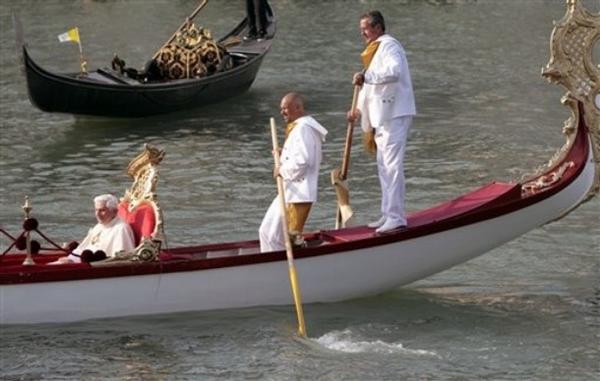
After the Mass, in scenes reminiscent of Pope John Paul II’s visit to Venice in 1985, Pope Benedict crossed Venice’s Grand Canal in a gondola river boat. His destination was the church of Our Lady of Good Health, where he delivered a speech to leading figures from civil society.

Sunday was the second and final day of the Pope’s first papal visit to Venice and surrounding areas, where tradition holds that Saint Mark the Evangelist brought the Christian gospel.

On Saturday Pope Benedict visited the historic town Roman port town of Aquileia.

(Catholic News Agency)

Church to celebrate St. Damien of Molokai on Tuesday

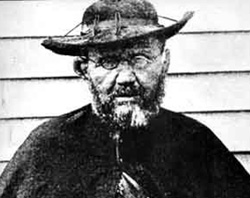
CNA STAFF, May 8, 2011 (CNA/EWTN News).- The Catholic Church will remember St. Damien of Molokai on May 10. The Belgian priest sacrificed his life and health to become a spiritual father to the victims of leprosy quarantined on a Hawaiian island.

Joseph de Veuser, who later took the name Damien in religious life, was born into a farming family in the Belgian town of Tremlo in 1840. During his youth he felt a calling to become a Catholic missionary, an urge that prompted him to join the Congregation of the Sacred Hearts of Jesus and Mary.

Damien’s final vows to the congregation involved a dramatic ceremony in which his superiors draped him in the cloth that would be used to cover his coffin after death. The custom was meant to symbolize the young man’s solemn commitment, and his identification with Christ’s own death. For Damien, the event would become more significant, as he would go on to lay down his life for the lepers of Molokai.

His superiors originally intended to send Damien’s brother, a member of the same congregation, to Hawaii. But he became sick, and Damien arranged to take his place. Damien arrived in Honolulu in 1864, less than a century after Europeans had begun to establish a presence in Hawaii. He was ordained a priest the same year.

During his ninth year of the priesthood, Father Damien responded to his bishop’s call for priests to serve on the leper colony of Molokai. A lack of previous exposure to leprosy, which had no treatment at the time, made the Hawaiian natives especially susceptible to the infection. Molokai became a quarantine center for the victims, who became disfigured and debilitated as the disease progressed.

The island had become a wasteland in human terms, despite its natural beauty. The leprosy victims of Molokai faced hopeless conditions and extreme deprivation, sometimes lacking not only basic palliative care but even the means of survival.

Inwardly, Fr. Damien was terrified by the prospect of contracting leprosy himself. However, he knew that he would have to set aside this fear in order to convey God’s love to the lepers in the most authentic way. Other missionaries had kept the lepers at arms’ length, but Fr. Damien chose to immerse himself in their common life and leave the outcome to God.

The inhabitants of Molokai saw the difference in the new priest’s approach, and embraced his efforts to improve their living conditions. A strong man, accustomed to physical labor, he performed the Church’s traditional works of mercy – such as feeding the hungry, sheltering the homeless, and giving proper burial to the dead – in the face of suffering that others could hardly even bear to see.

Fr. Damien’s work helped to raise the lepers up from their physical sufferings, while also making them aware of their worth as beloved children of God. Although he could not take away the constant presence of death in the leper colony, he could change its meaning and inspire hope. The death-sentence of leprosy could, and often did, become a painful yet redemptive path toward eternal life.

The priest’s devotion to his people, and his activism on their behalf, sometimes alienated him from officials of the Hawaiian kingdom and from his religious superiors in Europe. His mission was not only fateful, but also lonely. He drew strength from Eucharistic adoration and the celebration of the Mass, but longed for another priest to arrive so that he could receive the sacrament of confession regularly.

In December of 1884, Fr. Damien discovered that he had lost all feeling in his feet. It was an early, but unmistakable sign that he had contracted leprosy. The priest knew that his time was short. He undertook to finish whatever accomplishments he could, on behalf of his fellow colony residents, before the diseased robbed him of his eyesight, speech and mobility.

Fr. Damien suffered humiliations and personal trials during his final years. An American Protestant minister accused him of scandalous behavior, based on the contemporary belief that leprosy was a sexually transmitted disease. He ran into disagreements with his religious superiors, and felt psychologically tormented by the notion that his work had been a failure.
In the end, priests of his congregation arrived to administer the last sacraments to the dying priest. During the Spring of 1889, Fr. Damien told his friends that he believed it was God’s will for him to spend the upcoming Easter not on Molokai, but in heaven. He died of leprosy during Holy Week, on April 15, 1889.

St. Damien of Molokai was beatified in 1995. Pope Benedict XVI canonized him in 2009.

(From Catholic News Agency)

Pope speaks to Catholics in Northern Italy

It really was remarkable to see the Holy Father make his way from the airport in Gorizia, more than 11 miles away from Aquileia, in the Pope-mobile. He was greeted along the route by the faithful, to whose spirit I really would not do justice by calling them “enthusiastic”.

Pope Benedict wasted no time in establishing the themes and the tone of the visit, right from the get-go. In Aquileia, the Holy Father’s first public remarks were at the Piazza del Capitolo outside the Basilica of Aquileia. Often these greetings are really just an exchange of official pleasantries, but this time, Pope Benedict praised the Church of Aquileia in a prose that waxed rhapsodic.

He recalled the ancient roots of the Church, the Aquileian Church’s pivotal role in the evangelization of central Europe and also – this is poignant – in the defence of the true faith against the Arian heresy – a false teaching in the early centuries of the Church, which denied the full divinity of Christ. In this connection, Pope Benedict mentioned the great bishop Cromatius of Aquileia, by name. He was, said Pope Benedict, diligent and attentive as St Augustine of Hippo or St Ambrose of Milan – and St Jerome, a figure not known to praise often or lightly, called him “Holy and learned among the bishops.” So, Pope Benedict celebrated the way in which he worked to serve the Church: a perfect synthesis of learning and loving care for his flock.

But the Holy Father didn’t stop with the praise of Aquileia’s past glories: he also encouraged the faithful of Aquileia and all her daughter Churches in equally thrilling language:

“Dear brothers and sisters,” he said, children and heirs of the glorious Church of Aquileia, I am now among you to admire this rich and ancient tradition, but above all, I am here to confirm you in the deep faith of your fathers: in this hour of history,” he said, “rediscover, defend, and professes with warmth of spirit this fundamental truth.”

These were themes the Holy Father developed in his remarks to the organizers of the 2nd Ecclesial Assembly of Aquileia, shortly after the greeting in the square. He showed the organizers of the event – which is to take place in just under a year, so the Pope’s remarks really are offering guidance – that he has a firm grasp on the challenges to the faith. In many respects, the Church in Aquileia is facing the same challenges the Church is facing almost everywhere: the often exasperated search for economic well-being in a period of severe economic and financial crisis, practical materialism, and a dominant trend of subjectivism.
The Pope said, “In the complexity of these situations, you are called to promote the Christian meaning of life through the explicit proclamation of the Gospel, carried with gentle pride and great joy in the various areas of daily life. From faith lived with courage springs, today as in the past, a rich culture built upon the love of life, from conception until its natural end, the promotion of human dignity, high regard for the family based on faithful marriage open to life, commitment to justice and solidarity…” and he concluded with a reference to the 1st letter of Peter: “The cultural changes taking place,” he said, are calling you to be committed Christians, “ready to answer whoever asks you the reason for the hope that is in you (1 Peter 3:15).”

(Chris Altieri – Vatican Radio)