Monthly Archives: May 2011

Special event coming to Holy Angels – A DON’T MISS!

Pro-life author and speaker Abby Johnson, is coming to San Angelo. She will be giving a presentation at Holy Angels Church, at the corner of A&M Avenue and SAC Ave, next Saturday, May 14, at 1:00 p.m. The event is being sponsored by the Angelo Catholic School Foundation, Angelo Catholic School, and the Cursillo Movement. Johnson is a former director of Planned Parenthood, who has had a change of heart and is now strongly pro-life. She will recount some of her experiences when she gives her talk next Saturday.

I hope that everyone in the San Angelo area will make the time to listen to Ms. Johnson’s presentation. Let’s pack Holy Angels to standing-room only.

There is no charge for this event; however, an offering will be taken up to help defray expenses.

See you there on Saturday!

The Concho Padre

Pope sends prayers and support to tornado victims

Pope Benedict XVI was saddened to learn of the death, devastation and suffering caused by the April 25-28 tornadoes across the Southern United States and sends his prayers and support to victims and those engaged in relief and rebuilding efforts, according to a message from the Vatican.

In a May 2 communiqué to Archbishop Thomas J. Rodi of Mobile, Alabama, Cardinal Tarcisio Bertone, the Vatican Secretary of State, wrote:

“His Holiness Pope Benedict XVI was saddened to learn of the tragic consequences of the devastating tornado which struck Alabama and neighboring states, and he asks you to express his deep solidarity and pastoral concern to those affected by this natural catastrophe. He joins all of you in offering fervent prayers that Almighty God will grant eternal peace to those who have died and consolation and strength to the homeless, injured and suffering. Upon the local civil and religious leaders, and upon all engaged in the work of relief and rebuilding, he invokes the divine gifts of wisdom, strength and generous perseverance.”

The Concho Padre

Pope at Venice: bring hope to modern man


On Sunday Pope Benedict XVI celebrated Mass near Venice for a congregation of 300,000, telling them to give hope to modern man by “listening to and loving the Word of God.”

“Dear brothers and sisters! I have come among you as the Bishop of Rome and successor of Peter’s ministry to confirm fidelity to the Gospel and communion,” he told those gathered in San Giuliano Park in Mestre, an industrial town on the other side of the lagoon from the famous island city of Venice.

“As in the past, when those churches were known for apostolic zeal and pastoral dynamism, so today we need to promote and defend the truth with courage and unity of the faith. You must give an account of Christian hope for modern man, often overwhelmed by vast and disturbing issues that arise in crisis and shake the very foundations of his being and his activity.”

In a grand pastiche of the byzantine splendor of the city’s St. Mark’s basilica, the organizers of today’s Mass had erected a domed sanctuary draped with golden mosaics printed on cloth.
There, the Pope gave a commentary on today’s gospel, which recounts the disappointment of two disciples after the crucifixion of Jesus. They shared their gloom while walking towards the town of Emmaus near Jerusalem.

Pope Benedict connected these disciples’ feelings to present attitudes.

“The disciples of today are moving away from the Jerusalem of the Crucified Jesus and the Risen Lord, no longer believing in the power and the living presence of the Lord,” he explained. The problems of evil, pain and suffering, of injustice and oppression, lead today’s Christians to similarly say, “we were hoping that the Lord deliver us from evil, pain, suffering, fear, injustice.”

The Pope suggested that the solution to such despair was the same today as it was for the two disciples on the road to Emmaus – listening to Jesus and receiving him “in the breaking of bread.”

First, he said, it is necessary to be “listening to and loving the Word of God, reading it in light of the Paschal Mystery, for it warms our hearts and enlightens our mind, and helps us to interpret the events of life and give them meaning.

“Then, you must sit at the table with the Lord, to become his guests, so that his humble presence in the Sacrament of his Body and his Blood we restore our eyes of faith, to look at everything and everyone through the eyes of God, in light of his love.”

The Pope concluded by calling upon the Catholics of the region to uphold the Christian values of their forebears and to set “new missionary objectives” for themselves including building “bridges of dialogue between peoples and nations.”

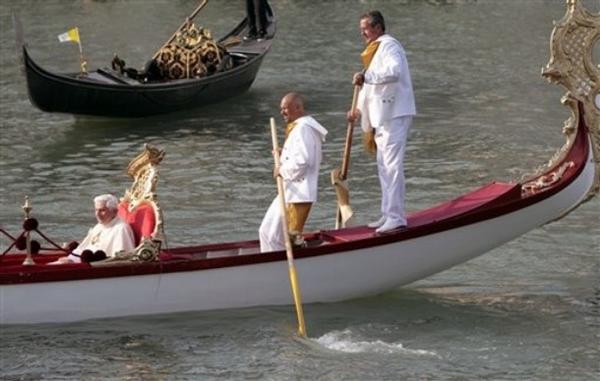
After the Mass, in scenes reminiscent of Pope John Paul II’s visit to Venice in 1985, Pope Benedict crossed Venice’s Grand Canal in a gondola river boat. His destination was the church of Our Lady of Good Health, where he delivered a speech to leading figures from civil society.

Sunday was the second and final day of the Pope’s first papal visit to Venice and surrounding areas, where tradition holds that Saint Mark the Evangelist brought the Christian gospel.

On Saturday Pope Benedict visited the historic town Roman port town of Aquileia.

(Catholic News Agency)

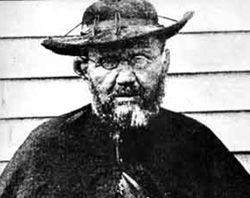
Church to celebrate St. Damien of Molokai on Tuesday

CNA STAFF, May 8, 2011 (CNA/EWTN News).- The Catholic Church will remember St. Damien of Molokai on May 10. The Belgian priest sacrificed his life and health to become a spiritual father to the victims of leprosy quarantined on a Hawaiian island.

Joseph de Veuser, who later took the name Damien in religious life, was born into a farming family in the Belgian town of Tremlo in 1840. During his youth he felt a calling to become a Catholic missionary, an urge that prompted him to join the Congregation of the Sacred Hearts of Jesus and Mary.

Damien’s final vows to the congregation involved a dramatic ceremony in which his superiors draped him in the cloth that would be used to cover his coffin after death. The custom was meant to symbolize the young man’s solemn commitment, and his identification with Christ’s own death. For Damien, the event would become more significant, as he would go on to lay down his life for the lepers of Molokai.

His superiors originally intended to send Damien’s brother, a member of the same congregation, to Hawaii. But he became sick, and Damien arranged to take his place. Damien arrived in Honolulu in 1864, less than a century after Europeans had begun to establish a presence in Hawaii. He was ordained a priest the same year.

During his ninth year of the priesthood, Father Damien responded to his bishop’s call for priests to serve on the leper colony of Molokai. A lack of previous exposure to leprosy, which had no treatment at the time, made the Hawaiian natives especially susceptible to the infection. Molokai became a quarantine center for the victims, who became disfigured and debilitated as the disease progressed.

The island had become a wasteland in human terms, despite its natural beauty. The leprosy victims of Molokai faced hopeless conditions and extreme deprivation, sometimes lacking not only basic palliative care but even the means of survival.

Inwardly, Fr. Damien was terrified by the prospect of contracting leprosy himself. However, he knew that he would have to set aside this fear in order to convey God’s love to the lepers in the most authentic way. Other missionaries had kept the lepers at arms’ length, but Fr. Damien chose to immerse himself in their common life and leave the outcome to God.

The inhabitants of Molokai saw the difference in the new priest’s approach, and embraced his efforts to improve their living conditions. A strong man, accustomed to physical labor, he performed the Church’s traditional works of mercy – such as feeding the hungry, sheltering the homeless, and giving proper burial to the dead – in the face of suffering that others could hardly even bear to see.

Fr. Damien’s work helped to raise the lepers up from their physical sufferings, while also making them aware of their worth as beloved children of God. Although he could not take away the constant presence of death in the leper colony, he could change its meaning and inspire hope. The death-sentence of leprosy could, and often did, become a painful yet redemptive path toward eternal life.

The priest’s devotion to his people, and his activism on their behalf, sometimes alienated him from officials of the Hawaiian kingdom and from his religious superiors in Europe. His mission was not only fateful, but also lonely. He drew strength from Eucharistic adoration and the celebration of the Mass, but longed for another priest to arrive so that he could receive the sacrament of confession regularly.

In December of 1884, Fr. Damien discovered that he had lost all feeling in his feet. It was an early, but unmistakable sign that he had contracted leprosy. The priest knew that his time was short. He undertook to finish whatever accomplishments he could, on behalf of his fellow colony residents, before the diseased robbed him of his eyesight, speech and mobility.

Fr. Damien suffered humiliations and personal trials during his final years. An American Protestant minister accused him of scandalous behavior, based on the contemporary belief that leprosy was a sexually transmitted disease. He ran into disagreements with his religious superiors, and felt psychologically tormented by the notion that his work had been a failure.
In the end, priests of his congregation arrived to administer the last sacraments to the dying priest. During the Spring of 1889, Fr. Damien told his friends that he believed it was God’s will for him to spend the upcoming Easter not on Molokai, but in heaven. He died of leprosy during Holy Week, on April 15, 1889.

St. Damien of Molokai was beatified in 1995. Pope Benedict XVI canonized him in 2009.

(From Catholic News Agency)

Pope speaks to Catholics in Northern Italy

It really was remarkable to see the Holy Father make his way from the airport in Gorizia, more than 11 miles away from Aquileia, in the Pope-mobile. He was greeted along the route by the faithful, to whose spirit I really would not do justice by calling them “enthusiastic”.

Pope Benedict wasted no time in establishing the themes and the tone of the visit, right from the get-go. In Aquileia, the Holy Father’s first public remarks were at the Piazza del Capitolo outside the Basilica of Aquileia. Often these greetings are really just an exchange of official pleasantries, but this time, Pope Benedict praised the Church of Aquileia in a prose that waxed rhapsodic.

He recalled the ancient roots of the Church, the Aquileian Church’s pivotal role in the evangelization of central Europe and also – this is poignant – in the defence of the true faith against the Arian heresy – a false teaching in the early centuries of the Church, which denied the full divinity of Christ. In this connection, Pope Benedict mentioned the great bishop Cromatius of Aquileia, by name. He was, said Pope Benedict, diligent and attentive as St Augustine of Hippo or St Ambrose of Milan – and St Jerome, a figure not known to praise often or lightly, called him “Holy and learned among the bishops.” So, Pope Benedict celebrated the way in which he worked to serve the Church: a perfect synthesis of learning and loving care for his flock.

But the Holy Father didn’t stop with the praise of Aquileia’s past glories: he also encouraged the faithful of Aquileia and all her daughter Churches in equally thrilling language:

“Dear brothers and sisters,” he said, children and heirs of the glorious Church of Aquileia, I am now among you to admire this rich and ancient tradition, but above all, I am here to confirm you in the deep faith of your fathers: in this hour of history,” he said, “rediscover, defend, and professes with warmth of spirit this fundamental truth.”

These were themes the Holy Father developed in his remarks to the organizers of the 2nd Ecclesial Assembly of Aquileia, shortly after the greeting in the square. He showed the organizers of the event – which is to take place in just under a year, so the Pope’s remarks really are offering guidance – that he has a firm grasp on the challenges to the faith. In many respects, the Church in Aquileia is facing the same challenges the Church is facing almost everywhere: the often exasperated search for economic well-being in a period of severe economic and financial crisis, practical materialism, and a dominant trend of subjectivism.
The Pope said, “In the complexity of these situations, you are called to promote the Christian meaning of life through the explicit proclamation of the Gospel, carried with gentle pride and great joy in the various areas of daily life. From faith lived with courage springs, today as in the past, a rich culture built upon the love of life, from conception until its natural end, the promotion of human dignity, high regard for the family based on faithful marriage open to life, commitment to justice and solidarity…” and he concluded with a reference to the 1st letter of Peter: “The cultural changes taking place,” he said, are calling you to be committed Christians, “ready to answer whoever asks you the reason for the hope that is in you (1 Peter 3:15).”

(Chris Altieri – Vatican Radio)

The Ordination Class of 2011

Typical New Priest: 31-Year-Old Who Prays Rosary, Takes Part In Adoration

The typical member of the ordination class of 2011 is a 31-year cradle Catholic who prayed the Rosary and took part in Eucharistic adoration before entering seminary, according to a survey of 329 of the 480 men slated to be ordained to the priesthood in the United States this year. The survey was conducted by the Center for Applied Research in the Apostolate.

Among the survey’s findings:

– the median age of ordinands is 31; the mean age, 34

– for diocesan ordinands, the mean age is 30; for religious ordinands, it is 36

– the typical diocesan ordinand has lived in his diocese for 15 years

– 69% are white, 15% are Latino, 10% are Asian, and 5% are African-American

– 33% were foreign born, with the typical foreign-born ordinand entering the US in 1998 at age 25; the most typical countries of origin were Colombia, Mexico, the Philippines, Poland, and Vietnam

– 52% of religious ordinands are foreign-born

– 8% are converts, with the typical convert entering the Church at age 25

– 60% had completed college before entering the seminary

– 47% attended a Catholic elementary school, 39% attended a Catholic high school, and 39% attended a Catholic college; 4% were homeschooled

– 34% have a relative who was a priest or religious

– in 82% of cases, both parents were Catholic

– 37% have four or more siblings; 16% have three siblings

– 94% had a full-time job before entering the seminary

– 8% served in the military, and 19% had a parent with a career in the military

– 66% were encouraged by a parish priest to consider a vocation; 42% were encouraged by their mother, and 27% by their father

– 52% were discouraged by a parent from considering a vocation; 20% were discouraged by a priest, and 8% were discouraged by a religious

– ordinands typically first began to consider the priesthood at 16

– 48% took part in a parish youth group, 30% participated in Boy Scouts, and 23% participated in the Knights of Columbus before entering the seminary

– 21% attended World Youth Day, and 8% attended a Franciscan University of Steubenville high school youth conference

– 71% served as altar servers, and 55% served as readers at Mass

– 70% prayed the Rosary and 65% took part in Eucharistic adoration before entering the seminary

The Concho Padre

Pope Benedict XVI’s homily at the Beatification Mass for John Paul II

“Dear Brothers and Sisters,

Six years ago we gathered in this Square to celebrate the funeral of Pope John Paul II. Our grief at his loss was deep, but even greater was our sense of an immense grace which embraced Rome and the whole world: a grace which was in some way the fruit of my beloved predecessor’s entire life, and especially of his witness in suffering.

Even then we perceived the fragrance of his sanctity, and in any number of ways God’s People showed their veneration for him. For this reason, with all due respect for the Church’s canonical norms, I wanted his cause of beatification to move forward with reasonable haste. And now the longed-for day has come; it came quickly because this is what was pleasing to the Lord: John Paul II is blessed!

I would like to offer a cordial greeting to all of you who on this happy occasion have come in such great numbers to Rome from all over the world – cardinals, patriarchs of the Eastern Catholic Churches, brother bishops and priests, official delegations, ambassadors and civil authorities, consecrated men and women and lay faithful, and I extend that greeting to all those who join us by radio and television.

Today is the Second Sunday of Easter, which Blessed John Paul II entitled Divine Mercy Sunday. The date was chosen for today’s celebration because, in God’s providence, my predecessor died on the vigil of this feast. Today is also the first day of May, Mary’s month, and the liturgical memorial of Saint Joseph the Worker. All these elements serve to enrich our prayer, they help us in our pilgrimage through time and space; but in heaven a very different celebration is taking place among the angels and saints! Even so, God is but one, and one too is Christ the Lord, who like a bridge joins earth to heaven. At this moment we feel closer than ever, sharing as it were in the liturgy of heaven.

‘Blessed are those who have not seen and yet have come to believe’ (Jn 20:29). In today’s Gospel Jesus proclaims this beatitude: the beatitude of faith. For us, it is particularly striking because we are gathered to celebrate a beatification, but even more so because today the one proclaimed blessed is a Pope, a Successor of Peter, one who was called to confirm his brethren in the faith. John Paul II is blessed because of his faith, a strong, generous and apostolic faith. We think at once of another beatitude: ‘Blessed are you, Simon, son of Jonah! For flesh and blood has not revealed this to you, but my Father in heaven’ (Mt 16:17). What did our heavenly Father reveal to Simon? That Jesus is the Christ, the Son of the living God. Because of this faith, Simon becomes Peter, the rock on which Jesus can build his Church. The eternal beatitude of John Paul II, which today the Church rejoices to proclaim, is wholly contained in these sayings of Jesus: ‘Blessed are you, Simon’ and ‘Blessed are those who have not seen and yet have come to believe!’ It is the beatitude of faith, which John Paul II also received as a gift from God the Father for the building up of Christ’s Church.

Our thoughts turn to yet another beatitude, one which appears in the Gospel before all others. It is the beatitude of the Virgin Mary, the Mother of the Redeemer. Mary, who had just conceived Jesus, was told by Saint Elizabeth: ‘Blessed is she who believed that there would be a fulfillment of what was spoken to her by the Lord’ (Lk 1:45). The beatitude of faith has its model in Mary, and all of us rejoice that the beatification of John Paul II takes place on this first day of the month of Mary, beneath the maternal gaze of the one who by her faith sustained the faith of the Apostles and constantly sustains the faith of their successors, especially those called to occupy the Chair of Peter. Mary does not appear in the accounts of Christ’s resurrection, yet hers is, as it were, a continual, hidden presence: she is the Mother to whom Jesus entrusted each of his disciples and the entire community. In particular we can see how Saint John and Saint Luke record the powerful, maternal presence of Mary in the passages preceding those read in today’s Gospel and first reading. In the account of Jesus’ death, Mary appears at the foot of the Cross (Jn 19:25), and at the beginning of the Acts of the Apostles she is seen in the midst of the disciples gathered in prayer in the Upper Room (Acts 1:14).

Today’s second reading also speaks to us of faith. St. Peter himself, filled with spiritual enthusiasm, points out to the newly-baptized the reason for their hope and their joy. I like to think how in this passage, at the beginning of his First Letter, Peter does not use language of exhortation; instead, he states a fact. He writes: ‘you rejoice’, and he adds: ‘you love him; and even though you do not see him now, you believe in him and rejoice with an indescribable and glorious joy, for you are receiving the outcome of your faith, the salvation of your souls’ (1 Pt 1:6, 8-9). All these verbs are in the indicative, because a new reality has come about in Christ’s resurrection, a reality to which faith opens the door. ‘This is the Lord’s doing’, says the Psalm (Ps 118:23), and ‘it is marvelous in our eyes’, the eyes of faith.

Dear brothers and sisters, today our eyes behold, in the full spiritual light of the risen Christ, the beloved and revered figure of John Paul II. Today his name is added to the host of those whom he proclaimed saints and blesseds during the almost twenty-seven years of his pontificate, thereby forcefully emphasizing the universal vocation to the heights of the Christian life, to holiness, taught by the conciliar Constitution on the Church, Lumen Gentium. All of us, as members of the people of God – bishops, priests, deacons, laity, men and women religious – are making our pilgrim way to the heavenly homeland where the Virgin Mary has preceded us, associated as she was in a unique and perfect way to the mystery of Christ and the Church. Karol Wojtyla took part in the Second Vatican Council, first as an auxiliary Bishop and then as Archbishop of Krakow. He was fully aware that the Council’s decision to devote the last chapter of its Constitution on the Church to Mary meant that the Mother of the Redeemer is held up as an image and model of holiness for every Christian and for the entire Church. This was the theological vision which Blessed John Paul II discovered as a young man and subsequently maintained and deepened throughout his life. A vision which is expressed in the scriptural image of the crucified Christ with Mary, his Mother, at his side. This icon from the Gospel of John (19:25-27) was taken up in the episcopal and later the papal coat-of-arms of Karol Wojtyla: a golden cross with the letter ‘M’ on the lower right and the motto ‘Totus tuus’, drawn from the well-known words of Saint Louis Marie Grignion de Montfort in which Karol Wojtyla found a guiding light for his life: ‘Totus tuus ego sum et omnia mea tua sunt. Accipio te in mea omnia. Praebe mihi cor tuum, Maria – I belong entirely to you, and all that I have is yours. I take you for my all. O Mary, give me your heart’ (Treatise on True Devotion to the Blessed Virgin, 266).

In his Testament, the new Blessed wrote: ‘When, on 16 October 1978, the Conclave of Cardinals chose John Paul II, the Primate of Poland, Cardinal Stefan Wyszynski, said to me: “The task of the new Pope will be to lead the Church into the Third Millennium”‘. And the Pope added: ‘I would like once again to express my gratitude to the Holy Spirit for the great gift of the Second Vatican Council, to which, together with the whole Church – and especially with the whole episcopate – I feel indebted. I am convinced that it will long be granted to the new generations to draw from the treasures that this Council of the twentieth century has lavished upon us. As a Bishop who took part in the Council from the first to the last day, I desire to entrust this great patrimony to all who are and will be called in the future to put it into practice. For my part, I thank the Eternal Shepherd, who has enabled me to serve this very great cause in the course of all the years of my Pontificate’. And what is this ’cause’? It is the same one that John Paul II presented during his first solemn Mass in Saint Peter’s Square in the unforgettable words: ‘Do not be afraid! Open, open wide the doors to Christ!’ What the newly-elected Pope asked of everyone, he was himself the first to do: society, culture, political and economic systems he opened up to Christ, turning back with the strength of a titan – a strength which came to him from God – a tide which appeared irreversible. By his witness of faith, love and apostolic courage, accompanied by great human charisma, this exemplary son of Poland helped believers throughout the world not to be afraid to be called Christian, to belong to the Church, to speak of the Gospel. In a word: he helped us not to fear the truth, because truth is the guarantee of liberty. To put it even more succinctly: he gave us the strength to believe in Christ, because Christ is Redemptor hominis, the Redeemer of man. This was the theme of his first encyclical, and the thread which runs though all the others.

When Karol Wojtyla ascended to the throne of Peter, he brought with him a deep understanding of the difference between Marxism and Christianity, based on their respective visions of man. This was his message: man is the way of the Church, and Christ is the way of man. With this message, which is the great legacy of the Second Vatican Council and of its ‘helmsman’, the Servant of God Pope Paul VI, John Paul II led the People of God across the threshold of the Third Millennium, which thanks to Christ he was able to call ‘the threshold of hope’. Throughout the long journey of preparation for the great Jubilee he directed Christianity once again to the future, the future of God, which transcends history while nonetheless directly affecting it. He rightly reclaimed for Christianity that impulse of hope which had in some sense faltered before Marxism and the ideology of progress. He restored to Christianity its true face as a religion of hope, to be lived in history in an ‘Advent’ spirit, in a personal and communitarian existence directed to Christ, the fullness of humanity and the fulfillment of all our longings for justice and peace.

Finally, on a more personal note, I would like to thank God for the gift of having worked for many years with Blessed Pope John Paul II. I had known him earlier and had esteemed him, but for twenty-three years, beginning in 1982 after he called me to Rome to be Prefect of the Congregation for the Doctrine of the Faith, I was at his side and came to revere him all the more. My own service was sustained by his spiritual depth and by the richness of his insights. His example of prayer continually impressed and edified me: he remained deeply united to God even amid the many demands of his ministry. Then too, there was his witness in suffering: the Lord gradually stripped him of everything, yet he remained ever a ‘rock’, as Christ desired. His profound humility, grounded in close union with Christ, enabled him to continue to lead the Church and to give to the world a message which became all the more eloquent as his physical strength declined. In this way he lived out in an extraordinary way the vocation of every priest and bishop to become completely one with Jesus, whom he daily receives and offers in the Eucharist.

Blessed are you, beloved Pope John Paul II, because you believed! Continue, we implore you, to sustain from heaven the faith of God’s people. How many time you blessed us from this very square. Holy Father, bless us again from that window. Amen.”

Visitors’ reactions to new Blessed John Paul II tomb

Vatican City, May 3, 2011 / 12:51 pm (CNA/EWTN News).- Since 7 a.m. this morning, visitors to St. Peter’s Basilica have been given their first glimpse of Blessed Pope John Paul II’s new final resting place.

So what do the pilgrims think?

“I think it’s very is beautiful,” says Father John McGinley, a Scottish priest who traveled to Rome for Sunday’s beatification. “It’s very simply and tastefully done.”

Since Sunday some 250,000 pilgrims had filed past the wooden coffin as it lay in state before the basilica’s high altar. Last night, in a private ceremony, it was transferred to the altar of St. Sebastian located near the right-hand-entrance to the church.

The brief service was led by the cleric in charge of the basilica, Cardinal Angelo Comastri, along with eight other cardinals.

As the coffin was taken to its final place of rest they sang the Catholic Church’s traditional litany of saints. On this occasion, though, the name “Beate Ioanna Paule” was recited three times at its conclusion. The casket was then incensed as a white marble tombstone with the inscription “Beatus Ioannes Paulus PP. II” was placed in front of it.

Fr. McGinlay is in Rome with his brother and sister-in-law, Terry and Margaret. I accompanied them as they paused before the new tomb for their first look.

“It’s actually very plain, very simple and that is exactly what the man would have liked. It wasn’t a splendorous thing. Yes, it’s very plain. It’s also very moving, of course, just being here.” Margaret agreed, “Yes, very simple, lovely, and really nice.”

“The new tomb is really just a reflection of the life that he led,” added Fr. McGinley, “It was a life of humility, a life of prayer and of simplicity. As well as well being a great witness and a great prophet for the Church.”

All day the altar of St. Sebastian has been the focal point of attention within the basilica. It sits just to the left of Michelangelo’s famous “Pieta” sculpture and just to the right of the Blessed Sacrament chapel.

The St. Sebastian altar had previously been used as the tomb of Blessed Pope Innocent XI. The remains of the 17th-century pontiff have now been translated to the Altar of the Transfiguration. It sits to the left of the high altar overshadowed by a marble statue of St Andrew the Apostle.

John Paul II biography from Beatification Mass Program

VATICAN CITY, MAY 1, 2011 — In the program distributed in St. Peter’s Square for the Mass of beatification of Pope John Paul II, a short biography of the Polish Pontiff was included. Here is the English version of the text:

Karol Józef Wojtyła, elected to the Papacy on October 16, 1978, was born in Wadowice (Poland) on May 18, 1920.

He was the second of two children born to Karol Wojtyła and Emilia Kaczorowska. His mother died in 1929. His older brother, Edmund, a doctor, died in 1932 followed by his father, an under official of the Armed Forces, who died in 1941.

At the age of nine Karol made his First Holy Communion, followed at the age of eighteen by the sacrament of Confirmation. After having completed high school in Wadowice, he enrolled as a student at the Jagiellonian University of Cracow in 1938.

Following the occupation by the Nazi forces and the University’s closure in 1939, the young Karol was forced to earn a living by working in a mine and in the Solvay chemical factory in order to avoid deportation to Germany.

Starting in 1942, after having felt the call to the priesthood, Karol began secretly to frequent courses at the clandestine Major Seminary in Cracow, directed by the Archbishop, Cardinal Adam Stefan Sapieha. At the same time, he was also one of the promoters of the clandestine “Rhapsodic Theater”.

After the war, Karol continued his studies at Cracow’s Major Seminary which had been reopened, and then at the Faculty of Theology of the Jagiellonian University until his priestly ordination in Cracow on November 1, 1946. He was then sent to Rome by Cardinal Sapieha where he pursued a Doctorate in Theology (1948), with a thesis on the topic of faith in the works of St. John of the Cross. During that time, in vacation periods, he exercised his pastoral ministry among Polish immigrants in France, Belgium and Holland.

In 1948, he returned to Poland and was at first assistant priest in the parish of Niegowić, near Cracow, and then in the Church of Saint Florian in the same city. As University Chaplain until 1951, he continued to study both Philosophy and Theology. In 1953, he presented a thesis at the Catholic University of Lublin on the “Evaluation of the Possibility of Constructing a Christian Ethic on the Ethical System of Max Scheler”. Later, he would become Professor of Moral Theology and Ethics at the Major Seminary of Cracow and at the Theological Faculty of Lublin.

On July 4, 1958, he was nominated by Pope Pius XII as Auxiliary Bishop of Cracow and Titular Bishop of Ombi. He was ordained Bishop on September 28, 1958 in the Cathedral of Wawel (Cracow) by Archbishop Eugeniusz Baziak.

On January 13, 1964, he was nominated as Archbishop of Cracow by Pope Paul VI, who also later made him a Cardinal on June 26, 1967.

Wojtyła also participated in the Second Vatican Council (1962 65), at which he made an important contribution to the preparation of the ConstitutionGaudium et Spes. Preceding his Pontificate, Wojtyła would also take part in five assemblies of the Synod of Bishops.

He was elected to the Papacy on October 16, 1978. On October 22nd he began his ministry as Shepherd of the Universal Church.

Pope John Paul II made 146 pastoral visits in Italy and as Bishop of Rome he visited 317 of the 332 parishes in Rome. The apostolic trips made throughout the world, an expression of his constant pastoral solicitude as Successor of St. Peter for the whole Church, added up to a total of 104.

Among the primary documents which he wrote are: 14 Encyclicals, 15 Apostolic Exhortations, 11 Apostolic Constitutions and 45 Apostolic Letters. He also wrote numerous other works including

five books: “Crossing the Threshold of Hope” (October 1994), “Gift and Mystery: on the Fiftieth Anniversary of My Priesthood” (November 1996), “Roman Triptych: Meditations” (March 2003), “Rise, Let us be on our way!” (May 2004), and “Memory and Identity” (February 2005).

Pope John Paul II presided over 147 Beatifications, declaring 1,338 beatified and 51 Canonizations, proclaiming a total of 482 saints. He also officiated in nine Consistories thereby creating 231 (plus 1 “in pectore”) Cardinals and presided at six plenary reunions of the College of Cardinals.

Beginning in 1978, he convoked 15 Assemblies of the Synod of Bishops: six Ordinary General Assemblies (1980, 1983, 1987, 1990; 1994 and 2001), one Extraordinary General Assembly (1985) and eight Special Assemblies (1980, 1991, 1994, 1995, 1997, 1998 [2] and 1999).

On May 13, 1981, Pope John Paul II was the victim of an attack in St. Peter’s Square. Having been saved by the maternal hand of the Mother of God, and following a long recovery, he forgave his attacker. Grateful for the gift of new life, he intensified his pastoral work with heroic generosity.

His solicitude as pastor was expressed, moreover, in the erection of numerous dioceses and ecclesiastical circumscriptions, as well as by the promulgation of the Codes of Canon Law for the Latin Catholic and Eastern Catholic Churches. As an encouragement to the People of God, he also inaugurated moments of particular spiritual intensity such as the Year of the Redemption, the Marian Year, and the Eucharistic Year as well as the Great Jubilee of the Year 2000. He also attracted younger generations by the celebration of World Youth Days.

No other Pope had ever encountered as many people as John Paul II: the number of pilgrims at the Wednesday General Audiences alone (more than 1,160 audiences) came to over 17 million pilgrims, to say nothing of the special audiences and other religious services (the Great Jubilee of the Year 2000 alone saw the arrival of 8 million pilgrims), and the other millions of faithful that he met during apostolic visits in Italy or throughout the world. Numerous government officials were also received in audience: there were 38 official visits and a further 738 audiences or meetings with Heads of State, along with 246 visits with Prime Ministers.

John Paul II died in the Vatican’s Apostolic Palace on Saturday, April 2, 2005 at 9:37 p.m., on the Vigil of the Sundayin Albis, also commemorated as Divine Mercy Sunday, which he had instituted. On April 8th, John Paul II was buried in the Vatican Grotto following the solemn funeral celebrated in St. Peter’s Square.

Canadian bishop pleads guilty to child porn; Canadian Bishops and Holy See issue statements

Following the guilty plea of the Most Reverend Raymond Lahey, former Bishop of Antigonish, Nova Scotia, the following statement has been issued by Canadian Conference of Catholic Bishops:

The Most Reverend Raymond Lahey, former Bishop of Antigonish, has pled guilty to possession of child pornography. The Canadian Conference of Catholic Bishops condemns all forms of sexual exploitation, especially involving minors, and continues to work to prevent such behaviour and to bring healing to the victims and their families.

Recognizing the confusion and anger that this case has engendered among many of the faithful, we underscore our pastoral concern for those who have experienced great pain as a result of these events. In a special way our thoughts and prayers are with the people of the Diocese of Antigonish and all the Atlantic region.

We reiterate the Catholic Church’s long-standing condemnation of the possession, distribution and use of child pornographic images in all forms, and renew our resolve to do everything we can to promote the dignity and respect of the human person.

The Holy See has also released the following statement:

The Most Reverend Raymond Lahey, former Bishop of Antigonish, has pled guilty to possession of child pornography.

The Catholic Church condemns sexual exploitation in all its forms, especially when perpetrated against minors.

Although the civil process has run its course, the Holy See will continue to follow the canonical procedures in effect for such cases, which will result in the imposition of the appropriate disciplinary or penal measures.